Summary
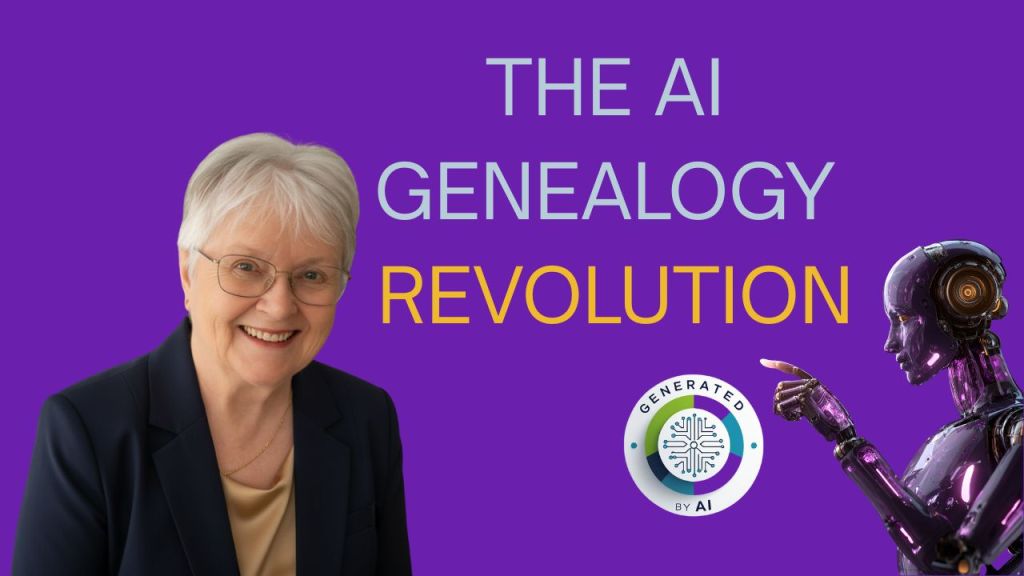
The video titled “The AI Genealogy Revolution” introduces an AI-powered workflow designed to enhance genealogical research and storytelling. Coach Carole shares insights from her own experience, emphasizing how AI tools can streamline the cumbersome genealogical process, which traditionally involved scattered notes, lost files, and inconsistent research methods. By integrating AI technologies such as ChatGPT, Claude, Perplexity, and Gemini into a structured cyclical workflow—Plan, Gather, Analyze, Organize, Write, Share—Carole demonstrates how genealogists can save time, stay organized, and focus more on storytelling rather than just data collection.
The video highlights how each AI tool serves a specific purpose: ChatGPT excels at generating research questions, transcribing records, creating timelines, and drafting ancestor profiles; Perplexity is effective for creating detailed locality guides with sources; Gemini is a powerful visual AI tool for generating historical images and family portraits. Tools like Canva and Trello complement the workflow by assisting in creating visual aids such as family trees, charts, and project management boards.
A practical demonstration of WeAre.xyz, an online family history archive platform, shows how AI-enhanced genealogical data and storytelling come together in a polished, shareable format. Carole underscores best practices such as saving AI prompts for reuse, verifying AI-generated facts rigorously, and maintaining consistent file-naming conventions. They caution against over-reliance on AI, encouraging users to treat AI outputs as drafts rather than final products.
Finally, Carole challenges viewers to experiment with AI by combining one AI tool and one genealogical record to create a mini workflow, adapting it to their unique needs. She also promotes online courseware at “Essential Genealogy 2.0 Academy” to help genealogists gain confidence in AI-assisted research. The video ends with a preview of the next installment focused on
AI-powered ancestral storytelling.
Highlights
- 🤖 AI transforms genealogy by streamlining research and organization.
- 🛠️ Key AI tools include ChatGPT, Claude, Perplexity, and Gemini, each excelling at specific genealogy tasks.
- 🗂️ A cyclical workflow (Plan, Gather, Analyze, Organize, Write, Share) underpins the AI-powered process.
- 🖼️ Gemini and Canva enable the creation of historically styled images and family visuals to enrich storytelling.
- 📊 Trello helps visualize and track genealogy project progress efficiently.
- 📚 WeAre.xyz offers a robust platform to publish and share AI-enhanced family histories.
- 🔍 Emphasis on verifying AI-generated data and saving prompts for consistent, repeatable workflows.
Key Insights
- 🤖 Integration of AI tools into genealogy is a game-changer: Traditional genealogy often suffers from disorganization and time-consuming manual tasks. Carole’s workflow shows how leveraging AI transforms data-heavy research into a manageable, efficient process, allowing genealogists to focus on the creative and narrative parts of genealogy. This shift is crucial for modern genealogists aiming to keep pace with rapidly improving AI technology.
- 🧩 Specialized AI tools complement rather than replace each other: Carole’s “chocolate box” approach—using ChatGPT, Claude, Perplexity, and Gemini—highlights that no single AI tool does everything perfectly. Instead, each tool is tailored for specific tasks such as text analysis, note organization, image generation, or locality research. This modular approach maximizes productivity and quality of outputs.
- 🔄 A repeatable, cyclical workflow fosters consistency and progress: The six-stage process—Plan, Gather, Analyze, Organize, Write, Share—is a structured method that prevents genealogists from getting overwhelmed or lost in their research. AI supports each phase, ensuring continuous momentum and efficient use of time. Repetition of this cycle also allows for refinement and deeper insights over time.
- 🎯 Customization of AI tools enhances effectiveness: Setting personalized preferences in ChatGPT—such as response style, personality, and focus area—enables genealogists to tailor AI output to their preferred tone and research needs. This customization reduces the time spent refining AI-generated content and improves relevance, demonstrating the importance of user input in optimizing AI assistance.
- 🗺️ Perplexity’s ‘spaces’ and locality guides exemplify AI’s potential in contextual research: The ability to create project-specific spaces keeps related conversations and data organized, while generating detailed, sourced locality guides offers enriched historical context important for storytelling. This capability bridges gaps between raw data and meaningful narratives.
- 🖼️ Visual AI tools like Gemini and Canva enhance storytelling by creating compelling imagery: Genealogy is not just about data but also about bringing ancestors’ lives to life visually. Using AI to generate period-appropriate portraits or family trees makes stories more engaging and accessible, appealing to wider audiences beyond academic researchers.
- 🔍 Maintaining rigorous verification and organization is essential despite AI’s power: Carole stresses the need to verify AI-generated facts against primary sources and avoid over-reliance on AI for final outputs. This cautious approach safeguards genealogical accuracy and integrity, reinforcing that AI is an assistant—not a replacement—for human judgment and expertise.
- 📈 AI-assisted genealogy is an evolving field requiring ongoing learning and adaptation: Tools and technologies are rapidly changing; genealogists must stay informed, experiment with new methods, and refine their workflows continually. Carole’s recommendation to take dedicated courses and experiment systematically reflects the importance of continuous skill development in this emerging discipline.
- 🌐 Platforms like WeAre.xyz integrate AI-enhanced research into shareable digital archives: The use of such platforms demonstrates a practical end-to-end solution where AI-generated content—texts, images, stories—can be organized, browsed, and shared in a professional format. This capability is crucial for preserving family legacies in an accessible and interactive manner.
- 💡 Starting small with a mini workflow encourages adoption and customization: Carole’s challenge to combine one AI tool with one genealogical record allows beginners to test AI’s benefits without overwhelming complexity. This incremental approach helps users discover what works best for their own research style and needs, fostering confidence and gradual integration of AI tools.
Conclusion
The video provides a comprehensive guide to building an AI-powered genealogical workflow that enhances efficiency, organization, and storytelling. By strategically combining multiple AI tools tailored to different research stages, genealogists can transform their traditional, fragmented approaches into streamlined, repeatable processes. The emphasis on customization, verification, and continuous learning ensures that AI serves as a powerful assistant while maintaining the quality and integrity of genealogical research. Additionally, the integration of visual AI and digital platforms for sharing research underscores the evolving nature of genealogy in the digital age. Overall, this AI-enhanced approach not only saves time but also enriches the narrative dimension of family history, making genealogy more accessible and engaging for modern researchers.
Next Steps
Come and join the growing network of AI-skilled genealogists at Ancestry in the Age of AI
Learn more at the Essential Genealogy 2.0 Academy with this mini course.
‘Getting Started with AI for Family Historians.’
Regards from Coach Carole

