Hello NextGen genealogists,
Artificial intelligence is transforming the way we explore our family histories. Tools that use natural‑language processing can rapidly extract names, dates, and locations from records, and machine‑learning algorithms can help predict family relationships in large datasets. Yet AI isn’t a silver bullet; models like ChatGPT can produce plausible but inaccurate information, so critical thinking and fact‑checking remain essential.
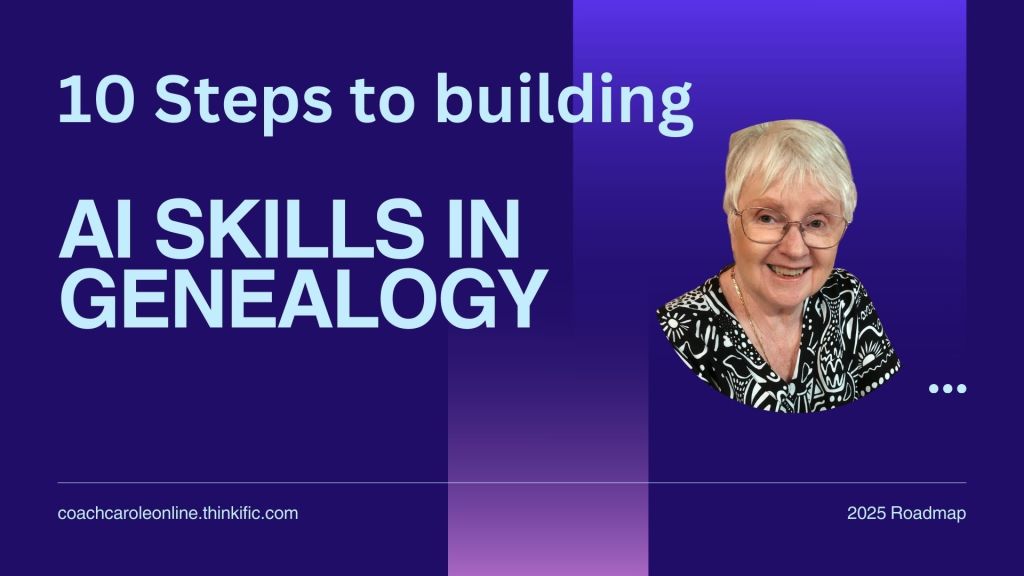
I am often asked how to get started with AI in genealogy, so at the beginning of this year, I created the 10-step video series: 10 Steps to Building AI Skills in Genealogy.
If you know of others who ask you the same question, please help them confidently integrate AI into their research with the 10‑step video series. Here’s a quick overview:
- Understanding AI in Genealogy: Learn what AI is, how it works and why it matters for family history. We explore the ethical considerations and cautionary tales.
- Mastering Basic AI Tools: Get comfortable with chatbots, image enhancers and transcription assistants. We show what they can (and can’t) do in a genealogy context.
- Research Planning: Use AI to formulate research questions, build to‑do lists and uncover resources you might have missed.
- Document Analysis: AI‑powered NLP can extract information from birth certificates, census records and newspapers; we demonstrate workflows for transcribing and summarising documents.
- Storytelling: Discover how generative tools help craft compelling narratives about your ancestors, turning facts into engaging stories.
- Creating with AI: Experiment with AI‑generated images, timelines and family‑tree visualisations to bring your research to life.
- Solving Mysteries: See how AI can spot patterns and suggest relationships, helping you break through research brick walls.
- Designing Your Own GPTs: Learn to customise chatbots for genealogy tasks, so you can automate common queries or analyses.
- Organising & Preserving: Use AI tools to manage your notes, tag photos and sync your data across platforms.
- Building Your AI‑Enhanced Workflow: Integrate these skills into a repeatable process that balances AI efficiency with human expertise.
Each step includes demonstrations, cautions and practical tips. Remember: AI tools are aids, not substitutes for careful research. You can watch the full series here:
👉 10 Steps to Building AI Skills in Genealogy – YouTube Playlist
If you are already skilled in using AI tools, then you may wish to advance those skills with specific functions and applications of AI for your genealogy projects. You can catch up with my AI Tips for your Genealogy Workflow here. I have 16 of these created this year and keep adding to the playlist as I discover and learn how to use other functions of my squad of AI tools and other software in my AI Toolkit. For example, the latest Transcribe Tool inside Ancestry.com if you have the Pro account. Follow up on that by viewing this video, Exploring Ancestry Transcribe Tool.
PS: Some Weekend Fun with Image Generation
I visited Steve Little’s intriguing post on how to prompt the AI image generator tool, Nano Banana for creating ‘spectral imagery’ on existing images. I used the Prompt featured there to produce the image at the top of this post, just for fun.
Note: I used the Nano Banana image generator model from within my Abacus.ai account where I had plenty of credits to accept such a lengthy prompt.
Fun Prompt Friday: Image Editing
If you’ve already started experimenting with AI in your own research, I’d love to hear what’s working for you and what questions you have. Reply to this newsletter or share your thoughts on social media using the tags #AIforGenealogy and #NextGenGenealogy.
Happy researching!
— Coach Carole

