Genealogy AI Face-Off
“A journey where technology meets personal heritage, breathing new life into ancestral stories through the life of Thomas Hugh Savage my Welsh great-granduncle, and grandson of Joseph Job Evans.“
There’s something profoundly moving about tracing the footsteps of those who came before us. Each document, census entry, and faded photograph becomes a whisper across time—connecting us to lives that, while now complete, continue to shape our own. As genealogists, we’ve always been detectives, piecing together fragmented clues to reconstruct the narratives of lives long past.
Today, I invite you on a journey that intertwines traditional genealogical research with emerging AI technologies. Through the life story of Thomas Hugh Savage – his childhood in rural Wales, his bold emigration to Canada, and the ripples of his choices through generations – we’ll explore how artificial intelligence can illuminate our understanding of family history in ways previously unimaginable.
This series is about deepening our connection to ancestral stories, finding patterns in the scattered fragments of the past, and giving voice to lives that might otherwise fade into historical silence.
Throughout this series, we’ll be using the fascinating case of Thomas Hugh Savage, born in 1904 in Pembrokeshire, Wales, whose life took him from working as a farmhand to emigrating to Canada in 1925. His story includes personal tragedy, migration, and adaptation—perfect for demonstrating AI’s capabilities.
1. Analyzing Documents
The documents we gather in our research – census records, certificates, letters, diaries – contain far more than simple facts. They hold narratives waiting to be uncovered, patterns waiting to be recognized. I’ve spent years collecting records about Thomas Hugh Savage, carefully transcribing and organizing them. But what key turning points might I have missed?
By feeding these research notes to AI assistants, I’ve discovered they can identify pivotal moments that shaped the trajectory of Thomas’s life – moments that might have escaped my notice when focused on collecting individual records rather than seeing the broader narrative.
The AI doesn’t replace our human insight but rather complements it, offering a fresh perspective that helps us see familiar information through new eyes. It becomes a thoughtful companion in our research, one that can process vast amounts of information simultaneously and highlight connections we might otherwise overlook.
Come back soon for the next video tutorials!
2. Extracting Key Facts
Even the most organized genealogist can struggle to keep track of every date, place, and relationship across generations of research. Here, AI tools demonstrate remarkable utility in swiftly extracting and organizing core genealogical data.
When I asked AI to “extract all birth, marriage, and death dates for Thomas Hugh Savage and his immediate family,” it systematically compiled this information from my notes. Similarly, having it “extract all locations associated with Thomas’s life, in chronological order” provided a clear geographical timeline of his movements from Wales to Canada.
This seemingly simple task transforms how we interact with our research. Rather than constantly referring to multiple documents, we can generate concise reference materials that capture essential information, allowing us to focus on deeper analysis and storytelling.
3. Creating Coherent Timelines
Our ancestors didn’t live in isolation – their decisions were shaped by the currents of history, economics, and social change that surrounded them. Creating comprehensive timelines allows us to place individual lives within their broader historical context.
When I asked AI to create a detailed timeline of Thomas Hugh Savage’s life, it didn’t simply list dates and events. It wove together personal milestones with historical developments that likely influenced his choices. The timeline was further enhanced with:
- Social and economic context for key decisions, such as his emigration from Wales to Canada in the aftermath of World War I
- Possible motivations for his geographic moves, considering factors like employment opportunities and family connections
- Identified gaps in documentation that require further research
This contextual understanding transforms Thomas from a name on a document to a man making difficult choices amid the tumultuous currents of early 20th-century history. Each date on the timeline becomes not merely a fact but a moment of human experience, decision, and consequence.
4. Embedding Historical Context
The choices our ancestors made – to stay or leave, to marry or remain single, to pursue certain occupations – were profoundly shaped by the historical circumstances they inhabited. Understanding these contexts adds depth and empathy to our genealogical research.
I asked AI to provide detailed historical context for key periods in Thomas Hugh Savage’s life:
- Rural Wales in the early 1900s, where he grew up amid changing agricultural practices and declining economic prospects
- Post-WWI Britain and the factors driving emigration to Canada in the 1920s, including unemployment and government-sponsored emigration schemes
- Life in Toronto for British immigrants in the 1930s, navigating both cultural familiarity and the challenges of establishing a new home
This contextual understanding transformed my perception of Thomas’s 1925 decision to emigrate. What once appeared as a simple change of residence became a courageous leap into uncertainty, motivated by complex economic pressures and personal aspirations. The history became not just background information but essential to understanding the human story at the heart of my research.
5. Identifying Patterns and Connections
Sometimes the most significant insights in genealogical research come not from discovering new documents but from recognizing patterns and connections in information we already possess. Here, AI’s ability to analyze across multiple data points proves invaluable.
When asked to identify patterns in Thomas Hugh Savage’s story that warranted further investigation, the AI highlighted connections I hadn’t fully appreciated – like the change of Thomas’s occupation to ‘hoistman’ and what that meant in the new mining town of Noranda.
These AI-identified patterns transformed into actionable research questions:
- Potential Connections to Investigate:
- ✅ Why did Thomas settle in Noranda, Quebec, specifically? Was it due to work, extended family, or economic reasons?
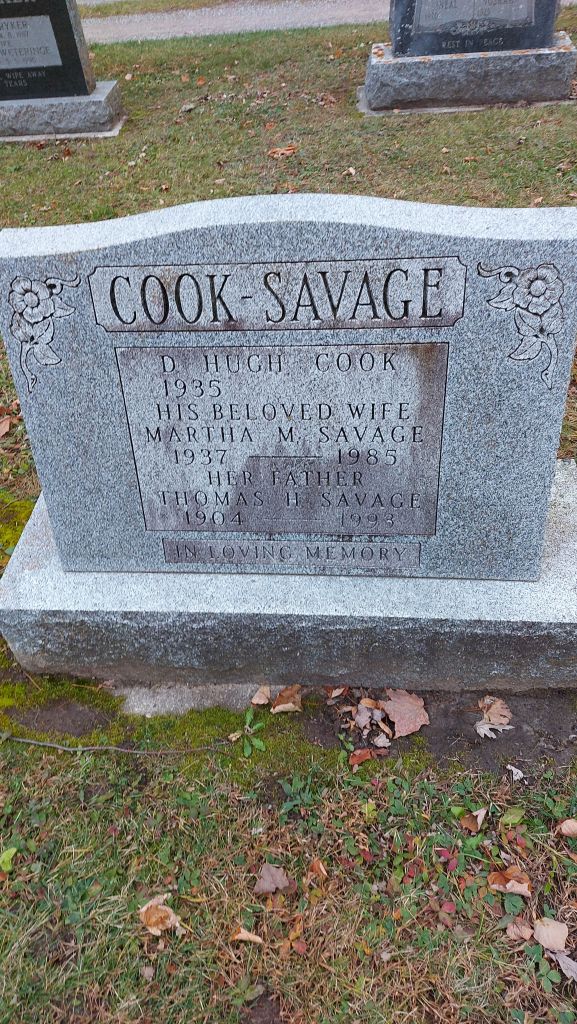
- ✅ Were there other Savage family members buried in Clinton Public Cemetery? Gravestone records might indicate family clusters.
- ✅ Did he live in Clinton long before his death, or was it a late-life relocation? Property records or directories could confirm his presence in the area over time.
Each pattern recognized becomes a new avenue for research, a new thread to follow in understanding not just what happened in our ancestors’ lives, but how and why events unfolded as they did.
6. Research Planning and Strategy
Every genealogist faces persistent questions – those tantalizing gaps in our understanding that resist easy answers. Developing effective strategies to address these questions is often as important as the research itself.
I began by posing three longstanding questions from my research on Thomas Hugh Savage:
- What happened to Thomas’s father, James Savage, after 1907?
- How did Thomas and Emily meet in Toronto?
- Why was Emily in Noranda, Quebec when she died in 1955?
For the first question, I created a comprehensive prompt from which the AI tools developed comprehensive research strategies, suggesting specific record types, repositories, and search approaches. More importantly, it offered multiple pathways – from most conventional to more creative alternatives – recognizing that genealogical breakthroughs often come from unexpected directions.
These AI-generated strategies didn’t replace my own research expertise but rather expanded my thinking, suggesting approaches I might not have considered and helping me prioritize which leads to follow first.
Practical Tips for Working with AI
Through my experimentation with AI for genealogical research, I’ve discovered that how we frame our questions dramatically affects the quality of responses we receive. When asking AI for research strategies, I’ve found these approaches most effective:
- Clearly define what you already know and what specific information you’re seeking
- Provide relevant contextual information about period and location
- Ask for multiple approach options, from most likely to more creative alternatives
- Request specific record types and repositories to check
- Have the AI prioritize which leads to follow first
This structured approach ensures that AI becomes a genuine thinking partner in your research rather than merely a search engine. The quality of AI assistance depends greatly on the quality of our queries – the more specific and contextual information we provide, the more valuable the insights we receive.
7. Analyzing Conflicting Information
[Space for YouTube video embed]
Every family historian encounters conflicting information – those perplexing contradictions in records that challenge our understanding and require careful evaluation. Rather than seeing these contradictions as obstacles, we can view them as invitations to deeper investigation.
I created test scenarios with conflicting information about Thomas Hugh Savage and asked AI to analyze the conflicts and recommend which information to trust. For example, I presented this scenario:
Thomas’s birthplace is listed as “Railway Cottage, Penally” on his 1925 passenger list, but simply as “Penally, Wales” on his 1930 marriage certificate.
The AI carefully evaluated factors like:
- Which document was created closer to the event in question
- Who provided the information in each document
- The purpose of each document and how that might affect its accuracy
- Common patterns of information simplification across different document types
This analytical approach helps us move beyond simply collecting contradictory information to thoughtfully evaluating the reliability of different sources, ultimately leading to more accurate family narratives.
8. Creating Family Narratives
[Space for YouTube video embed]
Documents provide the framework of our family histories, but it is through narrative that these histories truly come alive. The transformation from facts to story requires not just research skills but empathetic imagination – the ability to envision lives as they were lived amid the currents of personal circumstance and historical change.
I asked AI to create a narrative account of Thomas Hugh Savage’s childhood years at Treffloyne Farm after his mother was institutionalized in 1907. The resulting narrative, while firmly grounded in documented facts, breathed life into Thomas’s experience as a young boy navigating profound family change.
I then enhanced this narrative by requesting specific improvements:
- More sensory details about rural Welsh farm life in the early 1900s – the sounds of animals, the seasonal rhythms of agricultural work, the physical textures of daily experience
- Information about Thomas’s education, considering both formal schooling and practical farming knowledge
- An exploration of Thomas’s possible feelings about his mother’s absence, drawing on a psychological understanding of childhood loss
The resulting narrative maintained historical accuracy while achieving emotional resonance – helping me connect more deeply with Thomas’s lived experience and share his story more meaningfully with family members who never knew him.
9. Creating Visual Assets for Family History
[Space for YouTube video embed]
While narratives engage our minds, visual representations speak directly to our intuitive understanding. Maps, diagrams, and timelines can reveal patterns and relationships that might remain obscure in text alone.
I asked AI to conceptualize three types of visual assets for Thomas Hugh Savage’s story:
- A migration map showing his movements from Wales to Canada and back again for visits, visually representing the geographical scope of his life
- A relationship diagram highlighting key family connections, including those formed before and after emigration
- A visual timeline juxtaposing personal events with relevant historical developments
These visual assets serve multiple purposes – helping me identify patterns in my research, engaging family members who might be overwhelmed by text-heavy narratives, and providing frameworks for organizing future discoveries about Thomas’s life.
10. Choosing the Right AI for Genealogy Tasks
[Space for YouTube video embed]
Throughout this series, we’ve put Claude and ChatGPT through their paces across numerous genealogical challenges using Thomas Hugh Savage’s life story. Each AI demonstrated distinct strengths and approaches:
- Document analysis and fact extraction: [Summary of comparative performance]
- Timeline creation: [Summary of comparative performance]
- Understanding historical context: [Summary of comparative performance]
- Identifying patterns and connections: [Summary of comparative performance]
- Research planning: [Summary of comparative performance]
- Analyzing conflicting information: [Summary of comparative performance]
- Creating family narratives: [Summary of comparative performance]
- Designing visual assets: [Summary of comparative performance]
This comparison isn’t about declaring a winner but rather understanding which tool might better serve specific genealogical tasks. Different research questions and processes might benefit from different AI approaches, and understanding these nuances helps us integrate these tools more effectively into our research practice.
12. Future Developments to Watch
[Space for YouTube video embed]
As we conclude this exploration, it’s worth considering the horizon of possibilities emerging at the intersection of artificial intelligence and genealogy. Several developments bear watching:
- Specialized genealogical AI tools: While general AI assistants offer tremendous value, tools specifically designed for genealogical research may soon emerge, incorporating domain-specific knowledge about historical records and research methodologies.
- Integration with genealogy databases: The potential integration of AI capabilities directly into platforms like Ancestry, FamilySearch, and MyHeritage could transform how we search for and analyze records.
- Improved handwriting recognition: As AI becomes more adept at deciphering historical handwriting across different periods and regions, previously inaccessible documents may yield their secrets.
- Sophisticated relationship and network analysis: Future AI may excel at mapping complex social networks and community relationships, helping us understand our ancestors within their full social contexts.
The most promising aspect of these developments is not that they might replace traditional genealogical skills, but rather that they might free us to focus on the most human elements of family history – the storytelling, the connection to the past, and the preservation of memory across generations.
Conclusion
Our journey through Thomas Hugh Savage’s life demonstrates that AI tools don’t replace the genealogist’s expertise but rather extend our capabilities in remarkable ways. They help us see patterns across vast amounts of information, contextualize individual lives within broader historical currents, and transform disconnected facts into cohesive narratives.
As with any tool, the value lies not in the technology itself but in how we use it. When approached thoughtfully, AI becomes not merely a research assistant but a thought partner – one that helps us ask better questions, consider alternative perspectives, and ultimately connect more deeply with the lives that preceded our own.
The documents we collect will always be the foundation of genealogical research. But it is in the transformation of these documents into stories – stories that capture not just what happened but how it felt to be human in another time – that we truly honor those who came before us. In this sacred work of remembrance and connection, AI offers not a shortcut but a companion on the journey.