How Does a Genealogist Use Artificial Intelligence Tools Effectively?
Artificial intelligence (AI) tools have become indispensable for genealogists striving to uncover and preserve family histories in the rapidly evolving field of genealogy. AI is revolutionizing genealogy by automating time-consuming tasks, enhancing the accuracy of record transcriptions, and uncovering hidden connections in vast datasets, allowing genealogists to delve deeper into family histories with unprecedented efficiency and insight. These sophisticated tools offer unprecedented capabilities in deciphering, analyzing, and verifying historical records.
But how exactly does a genealogist use these AI tools effectively? This blog post explores five key ways AI can enhance genealogical research and practical tips for getting the most out of these technologies.
Note: AI Tools such as Chat GPT Omni and Claude Sonnet along with AI tools in Canva and WordPress, have been used to create, animate and illustrate this blog.
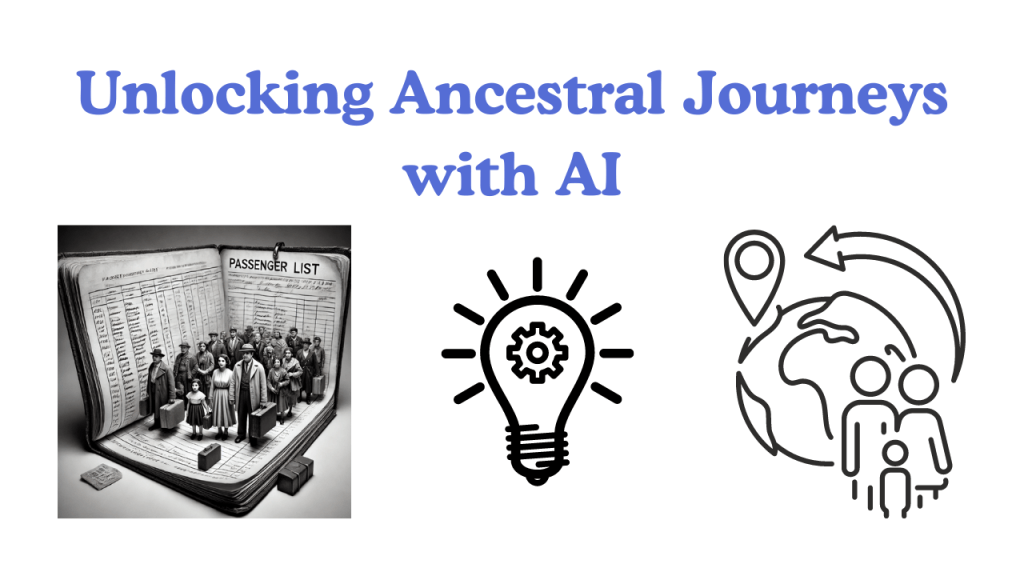
Tip 1: Migration – Decipher Names of Ancestors in Passenger Lists
Passenger lists can be a goldmine of information about your ancestors’ migration patterns. However, old handwritten lists can be challenging to read. AI tools can analyze and decipher difficult-to-read names, helping you trace the migration paths of your ancestors. This process can reveal when and how your ancestors moved, providing new insights into your family history.
Example: AI-powered optical character recognition (OCR) tools can scan handwritten passenger manifests and accurately transcribe difficult-to-read names. For instance, an AI tool might recognize that a smudged name “Smt_h” is likely “Smith” based on contextual clues and common naming patterns.
Benefits: Deciphering names in passenger lists contributes to a fuller understanding of family history by:
- Tracing migration patterns and timelines
- Identifying family groups travelling together
- Discovering the original spelling of surnames, which may have changed over time
- Providing clues about socioeconomic status based on travel class or ship type
By unlocking these details, you can piece together the story of your ancestors’ journey to a new land, understanding the challenges they faced and the hopes that drove them. This information can provide rich context for your family narrative and potentially lead to discovering previously unknown branches of your family tree.
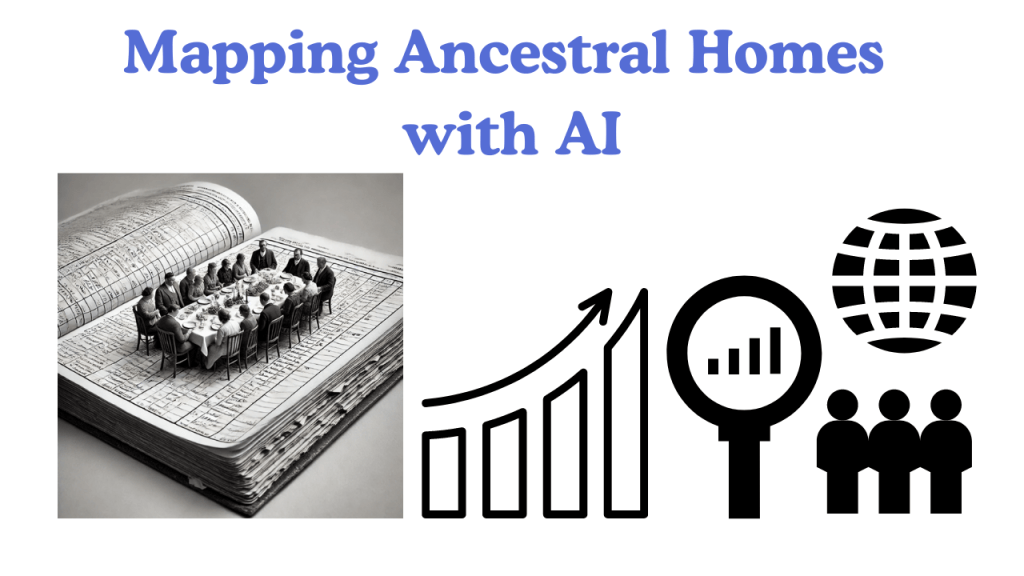
Tip 2: Demographics – Analyze Old Census Records for Ancestor Residences
Old census records can provide a demographic snapshot of your ancestors’ neighborhoods. AI can analyze these records to pinpoint where your ancestors lived, better understanding their living conditions and community structure. This can help you map out their lives more accurately and gain a deeper appreciation for their daily experiences.
Example: AI algorithms can scan digitized census records, extract address information, and plot these locations on modern maps. For instance, an AI tool might recognize that “123 Main St, Smalltown” from an 1880 census corresponds to a specific GPS coordinate today, even if street names or city boundaries have changed.
Benefits: Analyzing old census records for ancestor residences helps in:
- Visualizing the geographical distribution of your family over time
- Understanding the socioeconomic conditions of your ancestors based on their neighborhoods
- Identifying potential connections between families living nearby
- Tracing the movement of families between census years
By mapping out where your ancestors lived, you can gain insights into their daily lives, occupations, and community connections. This geographical context can help you understand why certain life decisions were made, such as career choices or marriages, and can even guide you to local historical societies or archives for further research.
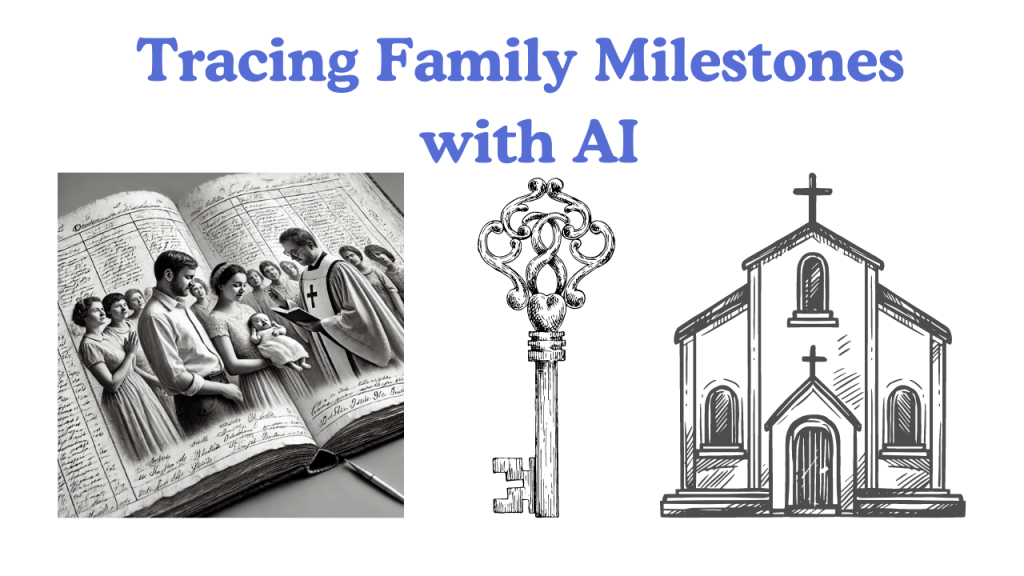
Tip 3: Baptism – Verify Dates of Christening in Old Baptism Parish Records
Verifying christening dates in old parish records can be a painstaking task. AI tools can help by cross-referencing these dates, ensuring the accuracy of your family tree. This confirmation of significant family milestones adds depth to your genealogical research and helps paint a complete picture of your ancestors’ early lives.
Example: AI-powered image recognition and natural language processing can scan handwritten parish records, identifying and extracting key information such as names, dates, and locations. For instance, an AI tool might recognize the phrase “baptized on the 3rd day of May in the year of our Lord 1823” and automatically convert it to a standardized date format.
Benefits: Verifying christening dates in old parish records contributes to your family history by:
- Establishing accurate timelines for your ancestors’ lives
- Confirming family relationships, especially parent-child connections
- Providing clues about religious affiliations and cultural practices
- Potentially revealing godparents or witnesses, expanding your understanding of family networks
By accurately tracing these early life milestones, you can build a more robust and reliable family tree. Christening records often contain additional information beyond just dates, such as the father’s occupation or the family’s place of residence, providing valuable context for your ancestors’ lives. This data can help you piece together a more comprehensive narrative of your family’s history, customs, and social standing within their community.
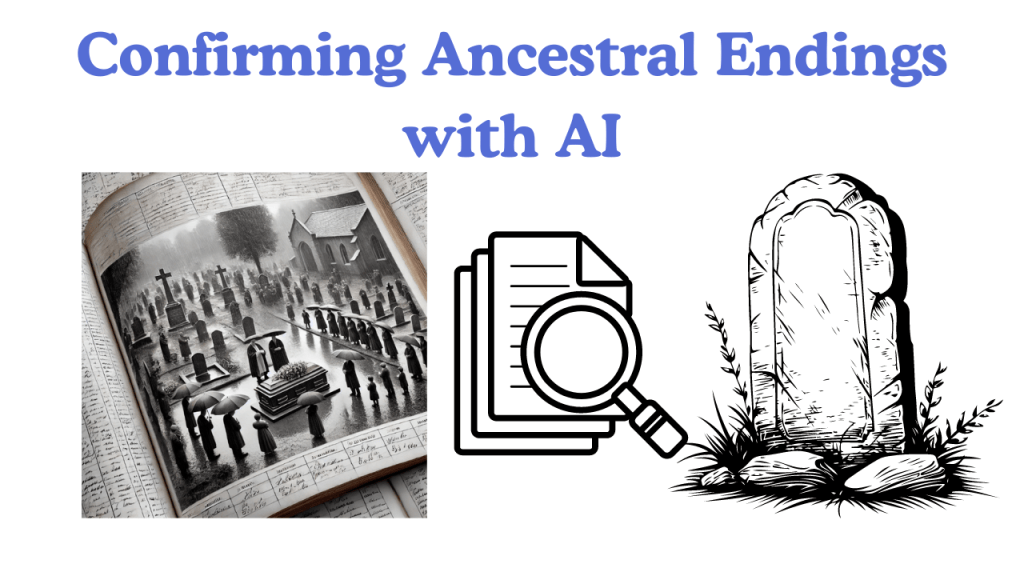
Tip 4: Burial – Verify Dates of Death in Old Parish Burial Records
Accurately verifying dates of death is crucial for a comprehensive family history. AI can assist by cross-referencing old parish burial records, ensuring the precision of your genealogical data. This not only helps to complete the life stories of your ancestors but also adds a layer of reliability to your research.
Example: AI algorithms can analyze scanned images of parish burial records, extracting and cross-referencing dates of death. For instance, an AI tool might recognize various date formats (e.g., “5th of April, 1876” or “04/05/1876”) and standardize them, while also flagging potential discrepancies or errors for human review.
Benefits: Accurately verifying dates of death in old parish burial records helps in:
- Completing the life stories of your ancestors with precise end dates
- Identifying potential epidemics or events that may have affected multiple family members
- Discovering additional family members through information about survivors or burial arrangements
- Understanding burial practices and religious customs of the time
By confirming these final milestones in your ancestors’ lives, you add a crucial piece to your family history puzzle. Accurate death dates can help you narrow down searches for wills or probate records, potentially uncovering valuable information about family relationships and inheritances. Moreover, understanding the circumstances of your ancestors’ deaths can provide insights into the challenges and health conditions they faced, painting a more complete picture of their lives and the times they lived in.
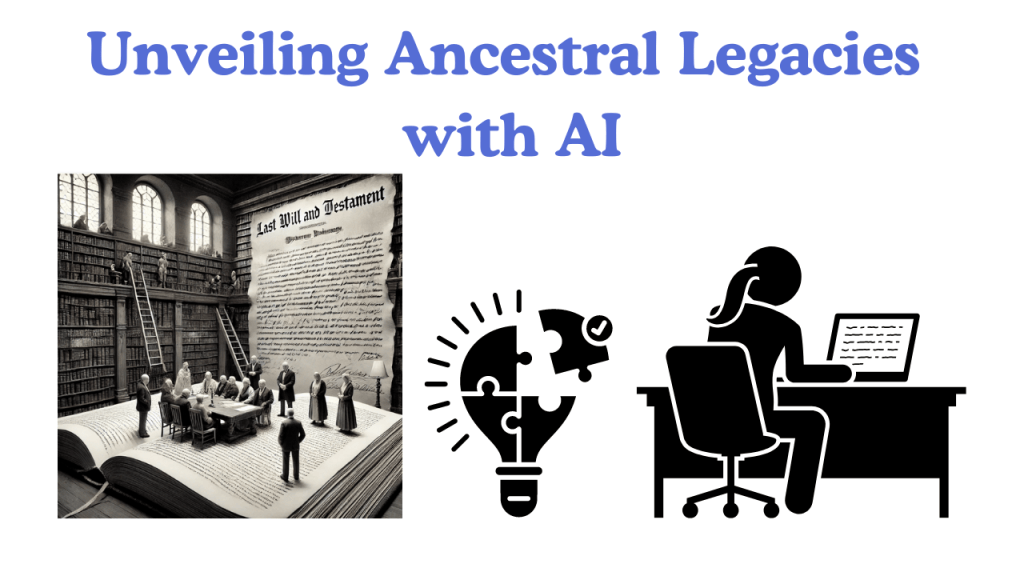
Tip 5: Will – Transcribe Details of Legacies in Old Parish Wills
Old parish wills can be difficult to read and interpret. AI can transcribe and analyze these documents, making it easier to understand the distribution of estates and the relationships between family members. This insight into your ancestors’ final wishes provides a deeper understanding of family connections and legacies.
Example: AI-powered natural language processing can analyze scanned images of handwritten wills, transcribing the text and extracting key information such as names, relationships, and bequests. For instance, an AI tool might recognize phrases like “to my beloved daughter Mary, I leave my silver pocket watch” and categorize this information accordingly.
Benefits: Transcribing details of legacies in old parish wills contributes to your family history by:
- Revealing family relationships and dynamics not evident in other records
- Providing insights into the economic status and material possessions of your ancestors
- Uncovering potential conflicts or estrangements within the family
- Offering clues about occupations, hobbies, or valued family heirlooms
By deciphering these often complex and lengthy documents, you gain a unique window into your ancestors’ lives and final wishes. Wills can reveal not just who inherited what, but also the reasoning behind these decisions, offering invaluable insights into family values and relationships. This information can help you construct a richer, more nuanced family narrative, understanding not just the facts of your ancestors’ lives, but also their personalities, priorities, and the legacy they hoped to leave behind.
Real-Time Updates
Imagine you’re working on your family tree late one night, focused on your great-grandmother’s lineage. Suddenly, a notification pops up – another researcher halfway across the world has just uploaded a photograph of your great-grandmother as a young woman. This isn’t science fiction; it’s the power of AI-driven real-time updates in action.
This happened for me just this week! I was scouring Ancestry.com for other Public Family Trees for my maternal ancestors and I found some old photographs of my grandparents that I had never seen before. I was able to update their thumbnail images on my family tree.
AI systems act like tireless, ever-vigilant assistants, constantly scanning connected databases and shared family trees for new information. They work silently in the background, comparing data, identifying relevant updates, and seamlessly integrating them into your research.
Gone are the days of manually checking for updates or stumbling upon new information by chance. Now, as soon as a distant cousin adds a vital record or another genealogist uncovers a long-lost document, that information can find its way to you. These AI systems don’t sleep, they don’t take breaks, and they don’t overlook details. They ensure that your family history is a living, breathing entity, growing and evolving in real time with each discovery.
This continuous flow of information not only keeps your research current but can also spark new avenues of investigation. A newly added marriage record might suddenly illuminate a whole branch of your family tree you never knew existed. With AI-powered real-time updates, every day holds the potential for exciting new discoveries in your family history journey.
How will you make effective use of AI tools in your genealogy?
By leveraging AI tools, you can unlock new levels of detail and accuracy in your research. Whether deciphering old passenger lists, analyzing census records, verifying baptism and burial dates, or transcribing wills, AI offers powerful capabilities to enhance your genealogical journey. These tools not only save time but also provide more precise and comprehensive family histories.
For a visualization of how AI is revolutionizing genealogy, check out this short YouTube video.
Using AI effectively involves understanding its strengths and integrating it thoughtfully into your research process. As you continue to explore your family history, AI can be a trusted partner in unveiling the stories of your ancestors and preserving their legacies for future generations.
What else would you like help with, in using AI tools?
As we’ve explored, AI tools are revolutionizing the way we approach genealogy research, offering exciting new possibilities for uncovering and preserving our family histories. But this is just the beginning! The world of AI in genealogy is constantly evolving, and there’s always more to learn.
We’d love to hear about your experiences with AI tools in your genealogy research. Have you made any surprising discoveries? Encountered any challenges? Or do you have questions about how to get started? Share your stories, insights, and questions in the comments below. Your experiences could help fellow genealogists on their own AI-assisted journeys!
Ready to dive deeper into the world of AI-assisted genealogy?
Visit the Essential Genealogy Academy for a wealth of resources, courses, and expert guidance. Whether you’re just starting out or looking to enhance your AI skills, we have something for every level of genealogist.
Remember, the future of genealogy is here, and it’s powered by AI. Let’s embrace these new tools together and unlock the fascinating stories of our ancestors. Your next big discovery could be just a click away!
Join our community of forward-thinking genealogists today and let’s shape the future of family history research together!
Happy researching!


3 responses to “Enhancing Genealogical Research with AI: 5 Practical Tips”
[…] Enhancing Genealogical Research with AI: 5 Practical Tips by Coach Carole on Essential Genealogist […]
LikeLike
[…] Enhancing Genealogical Research with AI: 5 Practical Tips by Carole on Essential Genealogist. […]
LikeLike
[…] Enhancing Genealogical Research with AI: 5 Practical Tips by Carole on Essential Genealogist. […]
LikeLike