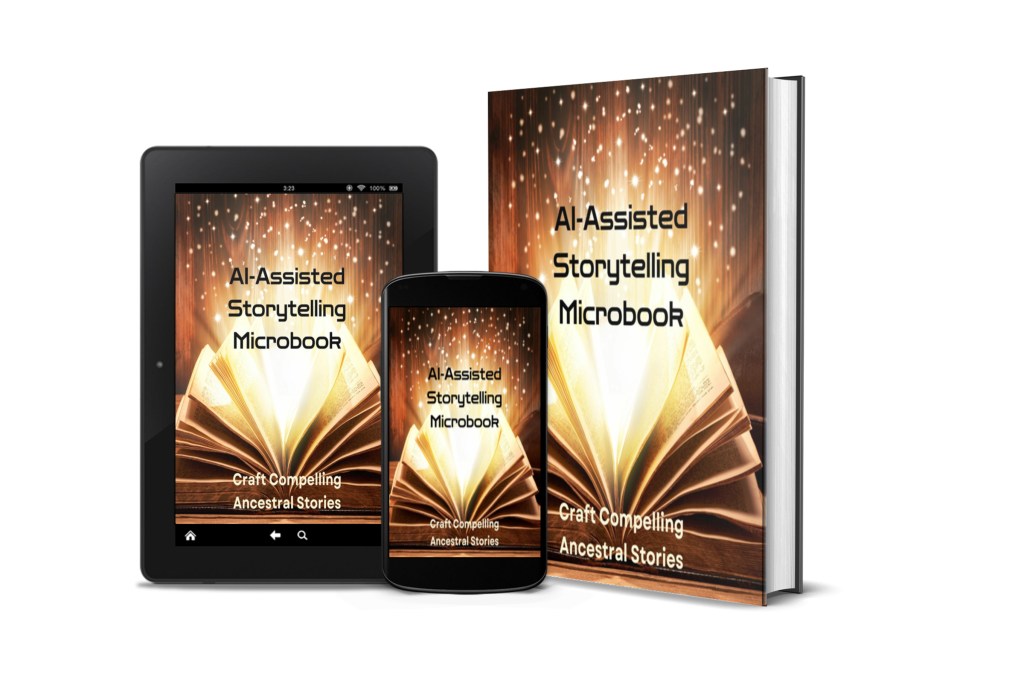
AI-Assisted Storytelling: Craft Compelling Ancestral Stories
Today’s creation is a new microbook on the art of crafting compelling ancestral stories with assistance from artificial intelligence tools. A microbook, at least my version of one, is a short instructional resource that can be read in an hour. This is a new adventure for me as I explore the capabilities of my AI assistants, Omni and Claude, along with Quillbot and Grammarly in fine-tuning my content creations. Here is the Preface and the Key Take Aways.
AI-Assisted Storytelling: Craft Compelling Ancestral Stories
Preface
In today’s digital age, the fusion of advanced technology with the age-old practice of genealogy is opening up new horizons for family historians. “AI-Assisted Storytelling: Craft Compelling Ancestral Stories” aims to guide you through the fascinating process of leveraging artificial intelligence to enhance and enrich your family narratives. This microbook is designed to equip genealogists and family historians at any level with the tools and techniques needed to create captivating ancestral stories.
Harnessing AI to craft compelling ancestral stories involves a few key steps, each of which brings the power of modern technology to the art of storytelling. Here’s an overview of the process:
1. Understand the Role of AI in Genealogy
Artificial Intelligence (AI) is revolutionising how we conduct genealogical research and write family stories. By automating data analysis, identifying patterns, and providing new insights, AI allows us to delve deeper into our ancestral histories. Understanding how AI can assist in genealogy is the first step toward creating more detailed and engaging family narratives.
2. Integrate AI Tools into Your Research
The journey begins by incorporating AI tools into your existing genealogical research. These tools can help you organise and analyse vast amounts of data, making uncovering hidden connections and stories within your family tree easier. Whether it’s identifying distant relatives or piecing together fragmented historical records, AI can enhance the accuracy and depth of your research.
3. Utilise AI for Storytelling
Once you have a solid foundation of research, AI can be used to transform this data into compelling stories. AI-powered writing assistants can help craft narratives with engaging structures, develop characters based on historical records, and suggest stylistic elements to enhance readability. By using AI to draft and refine your stories, you can create narratives that are both informative and emotionally resonant.
4. Enhance Storytelling Techniques
AI doesn’t just help with the technical aspects of writing; it also offers creative assistance. You can use AI to explore different storytelling techniques, such as foreshadowing, flashbacks, and dialogue, to add depth and intrigue to your narratives. AI can suggest plot twists, highlight significant events, and even simulate conversations between historical figures, bringing your ancestors’ stories to life.
5. Share and Preserve Your Stories
Finally, AI can assist in sharing and preserving your stories for future generations. Digital platforms allow for the creation of interactive family trees and multimedia presentations, making it easier to share your narratives with a wider audience. Additionally, AI tools can aid in preserving your stories in a format that future generations can access and appreciate.
This microbook will guide you through each of these steps, providing practical advice and examples to help you harness the power of AI in your genealogical storytelling. By the end of this journey, you’ll be equipped with the knowledge and tools to create compelling ancestral stories that will be cherished for generations to come.
Key Takeaways
-
- AI as a Powerful Ally: We’ve seen how AI can be a valuable tool in genealogy and storytelling, from enhancing research capabilities to generating creative ideas and improving narrative structure.
-
- The Importance of Human Touch: While AI is incredibly useful, we’ve emphasised throughout that your unique perspective, emotional connection, and critical thinking are what truly bring your ancestors’ stories to life.
-
- Ethical Storytelling: We’ve discussed the importance of maintaining ethical standards in our storytelling, balancing factual accuracy with narrative engagement.
-
- Diverse Storytelling Techniques: From developing compelling story arcs to incorporating flashbacks and dialogue, we’ve explored various techniques to make your family stories more engaging.
-
- Preservation and Sharing: We’ve looked at ways to preserve your stories for future generations and share them with a wider audience using digital platforms like WeAre.xyz.
The Journey Ahead
As you move forward with your AI-assisted ancestral storytelling, remember that this is an ongoing journey. Technology continues to evolve, offering new possibilities for uncovering and sharing your family’s history. Stay curious, keep learning, and don’t be afraid to experiment with new tools and techniques.
Call to Action
Remember, every family has a unique story waiting to be told. Your ancestors’ experiences, struggles, and triumphs deserve to be remembered and shared. By embracing AI as a tool in your storytelling toolkit, you’re not just preserving history; you’re bringing it to life for current and future generations.
So, what are you waiting for? Your ancestors’ stories are calling. It’s time to start writing, sharing, and preserving your family’s legacy. The world is waiting to hear your family’s unique tale.
Grab a copy of the AI-Assisted Storytelling Micro Book here! It is priced at just $5 US and could be just the thing to get you started in telling your family’s stories, the easy way!
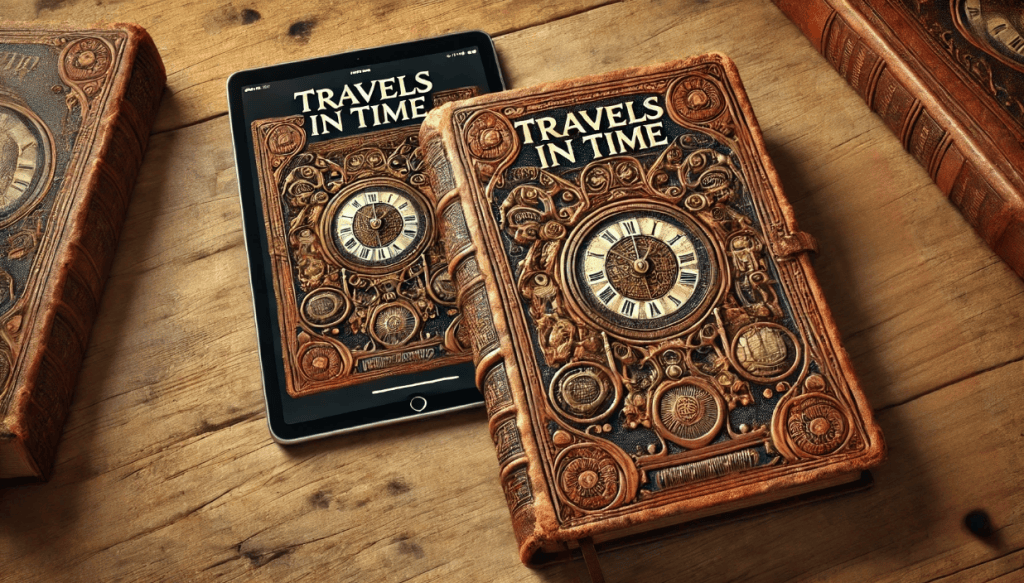
Here is an example story created recently with help from my AI assistants and following the steps in the AI-Assisted Storytelling Microbook. This is a work in progress.

The Allery Family’s Migration to Australia:
Chapter 1 The Decision to Leave

