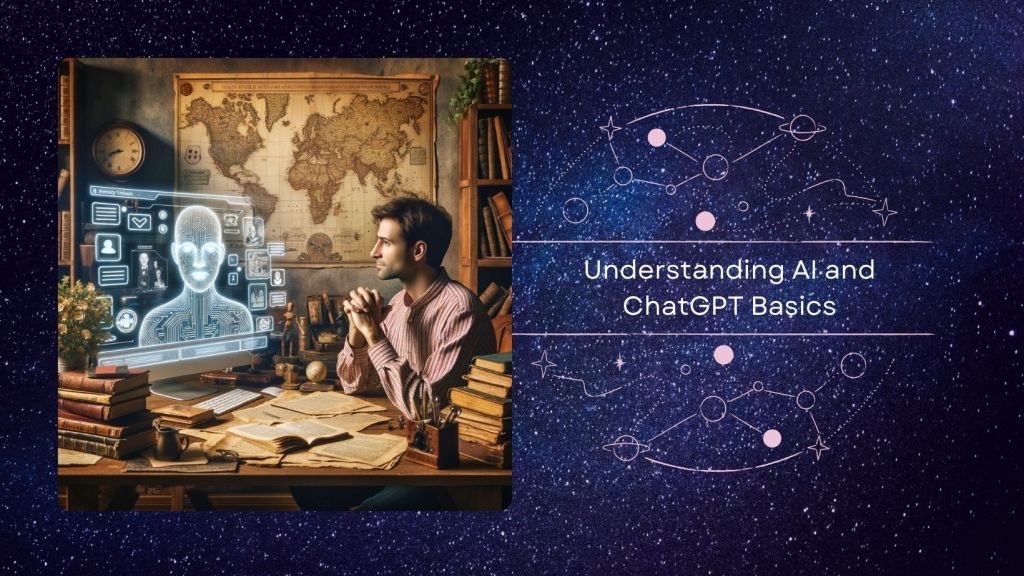
How to Navigate ChatGPT
Introduction
There have been several industries that have been revolutionised by the introduction of Artificial Intelligence (AI), and genealogy is not an exception to this rule. The purpose of this essay is to investigate the junction of artificial intelligence, namely ChatGPT, and the growing importance that it plays in genealogical research. When family historians and genealogists investigate ancestral lines, it can be quite beneficial to have an understanding of and make use of artificial intelligence techniques such as ChatGPT.
Comprehending Artificial Intelligence and ChatGPT
What Is the Difference Between AI and ChatGPT?
Artificial intelligence (AI) is essentially the emulation of human intelligence in machines that have been programmed to think and learn. OpenAI’s ChatGPT is a good example of this. It is an artificial intelligence-driven chatbot that is capable of producing text that is eerily similar to that of a human being based on the inputs that it gets.
The Development of Artificial Intelligence
Machine learning and natural language processing have both seen breakthroughs over the years, contributing to the rapid development of artificial intelligence (AI). Because of this evolution, artificial intelligence has improved its capacity to comprehend, interpret, and answer to many complex questions. As a result, it has become an extremely useful tool for researchers, especially genealogists.
Compare and contrast the GPT-3 and GPT-4 versions of ChatGPT
GPT-3 was a significant step forward in the field of language models; however, GPT-4 has pushed this to an even higher level by enhancing comprehension and providing more nuanced replies. When it comes to questions about historical facts or lineage particulars, this means that genealogists will have access to material that is more precise and comprehensive.
Research on Genealogy and Its Implications
The tremendous enhancements that have been made in recent editions have had a huge impact on genealogy research, providing responses that are more in-depth and contextual. When it comes to cross-referencing historical data, comprehending the circumstances of ancestral relationships, and even reading old documents, these technologies have completely become vital.
AI and ChatGPT each have their own set of limitations and biases.
The Discussion of Restrictions
AI and ChatGPT are not without their limitations, even though they are quite sophisticated. There is a possibility that responses will be incorrect or biased, and they do not provide the nuanced understanding that human insight supplies.
Gaining an Understanding of Possible Biases
Understanding the potential biases in artificial intelligence is essential in the field of genealogy. The material that artificial intelligence has been educated on may not comprehensively represent all parts of history or cultural nuances, which might lead to the formation of these biases.
In the field of genealogy, ChatGPT: Applications in Practice
The Application of Artificial Intelligence in Genealogy ChatGPT can be utilised by genealogists for a variety of tasks, including the automation of data collecting, the provision of summaries of historical events, and even the translation of old documents.
Actual-World Illustrations
For example, ChatGPT can decode old handwriting or offer prospective sources for elusive ancestral information, making it a great assistant in genealogical research. ChatGPT may also recommend possible sources for information that is difficult to find.
An Investigation into the GPT Store: Resources for Genealogists
GPT Store
An Overview of the Store
The GPT Store provides a variety of tools and plugins that have been developed with the express purpose of facilitating genealogical research. The capabilities of ChatGPT can be improved with the use of these tools when it comes to researching family history.
Bringing Attention to Particular Instruments
Some technologies can assist in the creation of family trees, the analysis of DNA data, and even the simulation of discussions with historical characters, which can provide a fresh perspective on the stories of ancestors.
Final Thoughts and a Call to Action
While it is true that AI and ChatGPT have certain shortcomings and biases, it is indisputable that they have the potential to be useful in the field of genealogy. Within the realm of ancestral research, they add a new dimension, bringing with them efficiency as well as a deeper comprehension of the subject matter. Genealogists and family historians are strongly encouraged to investigate ChatGPT and the tools that are associated with it. Your genealogical research can be considerably improved by embracing these technologies, which can also open up new doors for you to explore when it comes to learning about your family’s history.
Join us in Beyond the Pen, the latest opportunity available in the Preserving Family History Academy.
New Today! Monthly Subscription Options!
The content modules and lessons inside this course will be released over 90 days from the time you enrol. You no longer experience a sense of overwhelm due to the size of the modules and the length of your learning process thanks to this “drip style” of learning. Take your time and learn in this personalised style of self-paced learning.
Plus, you can budget for your learning over 4 months by paying $25 per month. This is an option for you at the checkout. Access to the course remains with you for as long as you like.
Plus, join the private community group ‘Ancestry in the Age of AI‘ on Facebook to share your progress and learn from each other.

